10,000 search results (0.025 seconds)
  1. MeninBlue - Unknown license
  2. funk - Unknown license
  3. Broken Toys - Unknown license
  4. Bifurk - Unknown license
  5. Hullunkruunu - Unknown license
  6. moebius - 100% free
  7. Iron Maiden - Unknown license
  8. Aerosol - Unknown license
  9. Tenby Five - Unknown license
  10. Nu School Munitions - Unknown license
  11. Weekend Warrior - 100% free
  12. Captain Kidd Demo - Unknown license
  13. Bandwidth Bandless BRK - Unknown license
  14. Metalic Avacodo - Unknown license
  15. Ishirkian - Personal use only
  16. GauFontLoveRocket - Unknown license
  17. Independence - Unknown license
  18. URAL 3d - Unknown license
  19. OhMyGodStars - Unknown license
  20. Sylar Stencil - Unknown license
  21. Occoluchi Minicaps - Personal use only
  22. Zig Zag ML - Personal use only
  23. Ganz Egal - Personal use only
  24. BN Manson Nights - Unknown license
  25. Monster Paparazzi - Unknown license
  26. Chizz Wide High - Unknown license
  27. Effloresce - Unknown license
  28. Pilsen Plakat - Unknown license
  29. MicroMieps - Unknown license
  30. Mechanical Fun - Unknown license
  31. HVD Poster - Unknown license
  32. Plate Gothic by Monotype, $29.00
    Around the turn of the twentieth-century, Steel and copper plate engraving was the most sophisticated and expensive method for producing business cards, stationery, and formal announcements. In engraved printing, the image is incised, or engraved into a hard, flat plate. Ink is applied to the plate, and then wiped off; leaving only the ink that is trapped below the surface in the incised areas. When the paper is pressed against the flat plate, the ink is drawn out of these areas and transferred to the paper. The results are twofold: printing which sits above the surface of the paper, and the reproduction very delicate lines and shapes. For business and formal printing, engraved printing was, and is, considered the best. The problem is that not everybody can afford the best. Type foundries, in the early 1900s, figured that if they could produce a typeface for traditional printing, which had appearance of engraving, they would be able to satisfy the needs of those forced to live with modest printing budgets. Engravers faces were born. Fredric Goudy’s Copperplate Gothic was one of the most popular. Plate Gothic is a version of this style updated for digital technology. It has all the charm and charisma as the metal type and yet is perfect for today's needs.
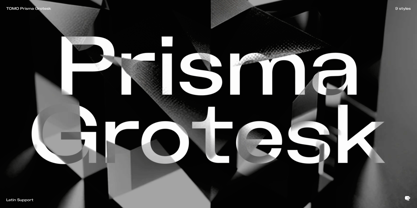
  33. Prisma Grotesk by TOMO Fonts, $20.00
    Discover TOMO Prisma Grotesk, a contemporary typeface that beautifully blends elegance and functionality, making it perfect for a wide range of applications. This typeface is a polyglot of design, speaking the language of both modernity and classic taste, ideal for corporate branding and advertising. Its geometric construction and modest design lend a sense of understated sophistication. With its sans serif styling, Prisma Grotesk is incredibly legible, suitable for everything from body text to headlines. Whether you're crafting an editorial piece or designing a magazine layout, its neutral yet striking appearance adapts seamlessly. Designed for the digital age, Prisma Grotesk is a neo-grotesque typeface, providing flexibility and adaptability across various media. It's perfect for identity and package design, where a distinctive and memorable appearance is key. In the realm of branding, Prisma Grotesk stands out with its neo-grotesque style, offering a contemporary twist on the grotesk tradition. A casual, approachable feel, suitable for both corporate and creative environments. Prisma Grotesk is not just a font but a comprehensive tool for designers seeking a reliable, elegant, and functional typeface. Elevate your design work with Prisma Grotesk – where contemporary style meets classic elegance, and versatility meets functionality. This typeface is not just a choice; it's a statement in design excellence. www.tomofonts.com
  34. Annlie by ITC, $29.99
    Annlie™ Extra Bold and Annlie Extra Bold Italic are two display faces designed by Fred Lambert in 1966 for the Annlie type family. These two samples from the Annlie family are both fat faces. Fat faces were offshoots of the modern, or Didone, typefaces that were de rigueur during the early 1800s. These fat faces were among the first typefaces to be used solely for advertising purposes. Naturally, they were always used in larger point sizes, in display functions. Annlie could be called an optimization of these old advertising typefaces. With high x-heights, ultra contrast between thick and thin strokes, and perfectly engineered drawing techniques, Annlie is a highly crafted typeface. Give it a spin in your next advertising campaign! Annlie’s fine thin strokes are very graceful in their appearance, and lend a strong, yet soft, feminine feeling to anything they touch.
  35. Sansumi - Unknown license
  36. Earth's Mightiest 3D - Unknown license
  37. SF Quartzite - Unknown license
  38. SF Juggernaut - Unknown license
  39. Minya Nouvelle - Unknown license
Looking for more fonts? Check out our New, Sans, Script, Handwriting fonts or Categories
abstract fontscontact usprivacy policyweb font generator
Processing