10,000 search results (0.02 seconds)
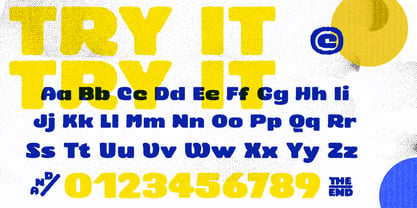
  1. Stubby Rough by Tipos Pereira, $10.00
    Stubby Rough is a display type family with 4 styles, inspired by the vernacular landscape. It was made for titles, headlines and also packages, posters and everything that provide space for a rude, fat and widish type. Nonetheless it can be a type for text if you are looking for an informal shape, with eleven styles mixing from a narrowed thin to a sloppy ultrabold. Stubby has a tight spacing looking to fit in squeeze places, trying to simulate some real spirit of the botecos from Brazil, always serving very cold beer in stubby brown bottles. Stubby Rough is a distressed version of the original Stubby.
  2. Bartholeme by Galapagos, $39.00
    The four weight semi-condensed Bartholemé family came into existence as a family expansion based on the designer's earlier concept, Bartholemé Open. This hybrid family was inspired by and loosely based on a number of contemporary mid-twentieth century type concepts having Old Face or Modern influence. Those inspirational type designs were primarily designed for various proprietary photolettering technologies of the time. The award-winning* Bartholemé Open and its companion design Bartholemé small capital open were inspired by various Shaded, Inline and Handtooled type models from the nineteenth and twentieth centuries. Most of those inspirational type designs were designed as titling fonts with all capital sets only. To set it apart from the earlier models, Bartholemé Open is semi-condensed intentionally designed with a lowercase. Design qualities include a large x- height, tightly curved ample counters, crisp serifs and tight bracketing. The overall plan of the family was originally intended for display usage in titling and short passages of text. At higher output resolutions all fonts read well at smaller point sizes. The Bartholemé family works well on its own, but also is compatible with type styles possessing qualities that complement or enhance its own. The Bartholemé family consists of a Regular weight complementing a Bold weight, along with Medium complementing an Extra Bold weight. The companion true-drawn italics are based on the Bartholemé roman design. * Award for Design Excellence bukva: raz! Type Design Competition of the Association Typographique Internationale, 2001
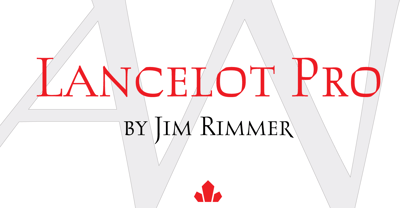
  3. Lancelot Pro by Canada Type, $39.95
    When type historians look back on Jim Rimmer, they will consider him the last type designer who just couldn't let go of metal type, even though he was just as proficient in digital type. Lancelot is one definite case in point: A face designed and produced in digital as late in the game as 1999, only to spring onto the new millenium a couple of years later as a metal type cast in three sizes. That was Jim, a time traveler constantly reminding the craft of its origins. This particular time machine was originally designed as a simple set of attractive caps that emphasize the beauty of the variable conventional dialogue between the drawing tool and the intended final form, and the one exchanged within the totality of the forms themselves. Jim designed two weights, with contrast and counterspace being the main difference between them. In 2013, the Lancelot family was remastered and greatly expanded. Lancelot Pro is now a wonder of over 840 glyphs per font, including smaller versions of the caps in the minuscule slots, and alternates and ligatures that can transform the historic spirit of the original design into anything from half-uncial to outright gothic. Language support goes beyond the extended Latin stuff, to cover Cyrillic and Greek as well. 20% of the Lancelot Pro family's revenues will be donated to the Canada Type Scholarship Fund, supporting higher typography education in Canada.
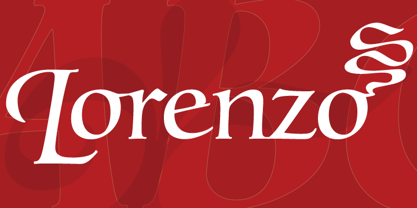
  4. Lorenzo by Canada Type, $24.95
    The lifetime of Lorenzo de Medici (1449-1492) coincides with the rise of metal type as it displaced broad pen calligraphy for the production of books. This revolution marked the end of formal Western calligraphy, as the industry employed metalworkers who designed type according to geometric measurement while calligraphers were forced to become secretaries who practiced handwriting systems. Renaissance Florence should have witnessed the marriage of calligraphy and typography, just as all the other arts and sciences flourished as classical learning was applied to technical advances; but the metalworkers and geometricians measured, dissected and recast the calligraphic letters by crude indirect methods, and in the end took all the life out of them. Here they languished until digital type has made it possible to render the precise motion of the broad pen stroke into type. Lorenzo is a confluence of many strains from the Middle Ages, brought together within the classical harmony of the capitals. It attempts to bypass metal type, using calligraphic means to achieve the precision of type while retaining the life of the stroke: a classical font that would be familiar to Lorenzo himself as well as to the modern eye. The Lorenzo family comes in four weights, ranging from light to bold. Two sets of italics, one with swashed caps and ascenders, complement each weight. The family boasts extensive language support and an offering of over fifty calligraphic ornaments/flourishes included within the character set.
  5. DeLouisville - 100% free
  6. Aspire - Unknown license
  7. Kryptonian - Unknown license
  8. VTBulletin - Unknown license
  9. ImperatorSmallCaps - Unknown license
  10. TwyliteZone - Unknown license
  11. Imperator - Unknown license
  12. Blazing - Unknown license
  13. Baby Blocks - Unknown license
  14. Final Fantasy - Unknown license
  15. Stormbringer - Personal use only
  16. Pessimistic Lines - Unknown license
  17. Estrogen-Wall - Unknown license
  18. Estrogen-Pill - Unknown license
  19. Paddington - Unknown license
  20. Xeroprint - Unknown license
  21. Zoloft - Unknown license
  22. Mister Sinister - Unknown license
  23. Zoloft - Unknown license
  24. Elric - Unknown license
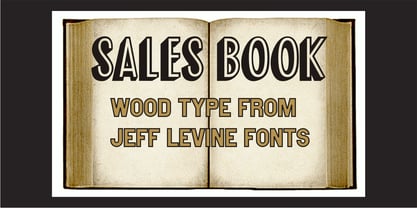
  25. Sales Book JNL by Jeff Levine, $29.00
    Sales Book JNL was recreated from sample letters found in the wood type section of an old printer's supply catalog.
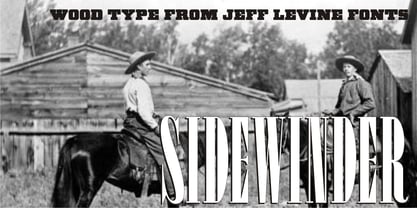
  26. Sidewinder JNL by Jeff Levine, $29.00
    Sidewinder JNL is based on ultra-compressed serif wood type and is perfect for fitting long copy into limited space.
  27. Slim James JNL by Jeff Levine, $29.00
    Tall, condensed and square in shape... Slim James JNL balances well against bolder Deco-style sans or novelty type faces.
  28. Bruce 1065 by Intellecta Design, $28.90
    Bruce 1065 is a digitization of the Bruce's Typefoundry font n. 1065 in your classical catalogue of types from 1886
  29. Knofedt by PizzaDude.dk, $15.00
    Comicbook letters with a laid back slightly wobbly look! 4 different lowercase letters, which automatically cycle as you type! Wow!
  30. Grotesque Bold Italic by Wooden Type Fonts, $15.00
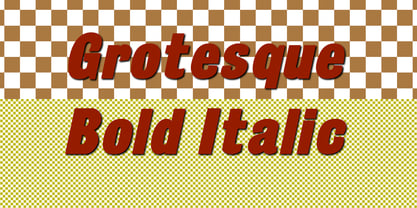
    Based on a revival of one of the popular type fonts of the 19th century, suitable for display, or text.
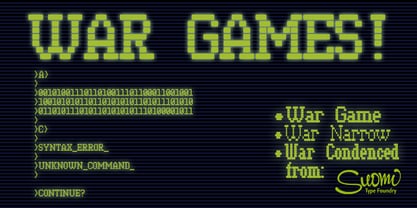
  31. War by Suomi, $19.00
    The matrix screen types from the movie War Games stuck in my mind, so I decided to make few versions.
  32. Roman Tyres by Red Rooster Collection, $45.00
    An original design, based on a very early turn-of-the-century typeface from the defunct Keystone Type Foundry, Philadelphia.
  33. Gothic Tuscan Condensed by Wooden Type Fonts, $25.00
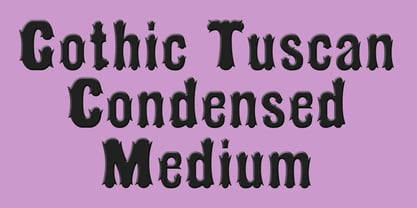
    A revival of one of the popular wooden type fonts of the 19th century, a very useful design for display.
  34. Tuscan Egyptian by Wooden Type Fonts, $15.00
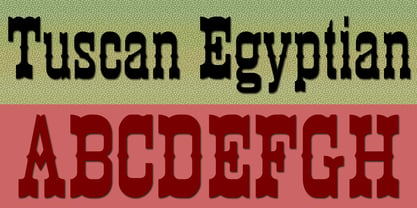
    A revival of one of the popular wooden type fonts of the 19th century. Suitable for posters and display applications.
  35. Rolling Ball Cursive by Gerald Gallo, $20.00
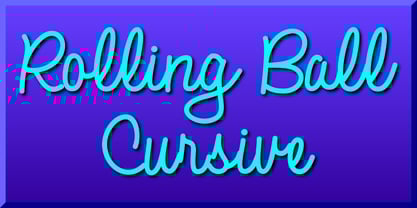
    Rolling Ball Cursive simulates a handwritten style executed with one of the many types of rolling ball pens now available.
  36. Gothic Tuscan by Wooden Type Fonts, $15.00
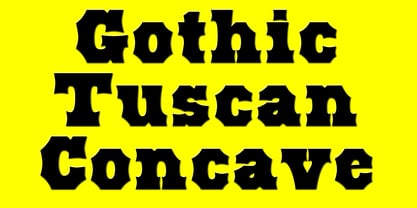
    A revival of one of the popular wooden type fonts of the 19th century; a very useful design for display.
  37. Notification JNL by Jeff Levine, $29.00
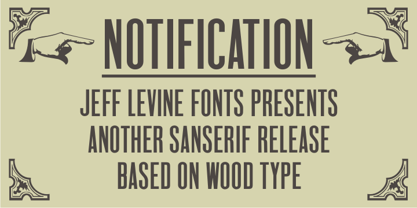
    Notification JNL is another condensed sanserif design loosely based on one of the many variations of wood type headline fonts.
  38. TB Matrix by TrueBlue, $10.00
    A creative dot matrix font with more likeable and funny types of dots. Also contains an extended set of characters.
  39. Prat MF by Masterfont, $59.00
    The famous favorite of the sign makers. Great for display type as well as headlines for fashion, theater TV etc.
  40. Generis Slab by Linotype, $29.00
    The idea for the Generis type system came to Erik Faulhaber while he was traveling in the USA. Seeing typefaces mixed together in a business district motivated him to create a new type system with interrelated forms. The first design scheme came about in 1997, following the space saving model of these American Gothics. Faulhaber then examined the demands of legibility and various communications media before finally developing the plan behind this type system. Generis’s design includes two individually designed styles; each of with is available with and without serifs, giving the type system four separate families. Each includes at least four basic weights: Light, Regular, Medium, and Bold. Further weights, small caps, old style figures, and true italics were added to each family where needed. The Generis type system is designed to meet both optical criteria and the highest possible measure of technical precision. Harmony, rhythm, legibility, and formal restraint make up the foreground. Generis combines aesthetic, technical, and economic advantages, which purposefully and efficiently cover the whole range of corporate communication needs. The unified basic form and the individual peculiarity of the styles lead to Generis’ systematic, total-package concept. The clear formal language of the Generis type system resides beneath the information, bringing appropriate typographic expression to high-level corporate identity systems, both in print and on screen. The condensed and aspiring nature of the letterforms allows for the efficient setting of body copy, and the economic use of the page. A range of accented characters allows text to be set in 48 Latin-based languages, offering maximal typographic free range. This previously unknown level of technical and design execution helps create higher quality typography in all areas of corporate communication. Optimal combinations within the type system: Generis Serif or Generis Slab with Generis Sans or Generis Simple.
Looking for more fonts? Check out our New, Sans, Script, Handwriting fonts or Categories
abstract fontscontact usprivacy policyweb font generator
Processing