10,000 search results (0.025 seconds)
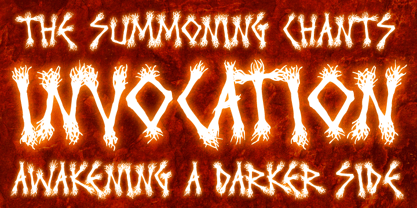
  1. Invocation AOE by Astigmatic, $19.95
    Made from a simple font incantation, the Invocation typeface was born. Inspired by an old Atari game called Necromancer where trees uprooted and came after the wizard, or something like that. The end result, a thematic typeface spawning roots. On darkened night, the moon eclipsed, a cryptic verse does pass my lips, from ancient parchment, edges worn, this Invoctation font is born... Sometimes we need an evil look for our designs, so why not summon this typeface into your hands today!
  2. My Puma - Unknown license
  3. Ecolier - Unknown license
  4. VegasTWENTYTWO - Unknown license
  5. Rubbed - Unknown license
  6. SF Foxboro Script - Unknown license
  7. SF Foxboro Script Extended - Unknown license
  8. SF Cartoonist Hand SC - Unknown license
  9. SF Foxboro Script Extended - Unknown license
  10. SF Cartoonist Hand - Unknown license
  11. NewStyle - Unknown license
  12. Alphawave - Unknown license
  13. SF Cartoonist Hand SC - Unknown license
  14. SF Zimmerman - Unknown license
  15. Critical Mass - Unknown license
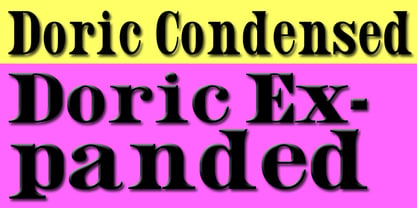
  16. Doric by Wooden Type Fonts, $15.00
    A revival of one of the popular wooden type fonts of the 19th century, suitable for text.
  17. KG Flavor And Frames Three by Kimberly Geswein, $5.00
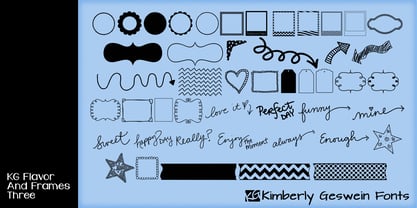
    Frames and borders of various types. Also includes a series of words perfect for accenting Instagram photos.
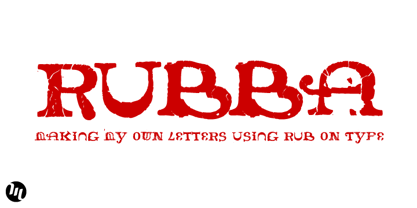
  18. Rubba by MADType, $19.00
    Rubba was created using rub-on type to create completely new letterforms from the bits of others.
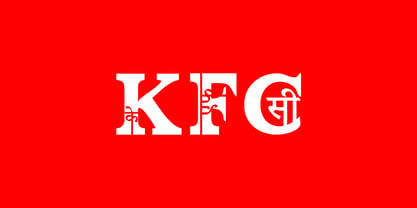
  19. Habibi by Habibi Shaikh, $99.00
    Its Indian language Hindi/Marathi mixed with English alphabets for exp. A mixed with Hindi type (A)
  20. Wynwood JNL by Jeff Levine, $29.00
    Wynwood JNL is a wider treatment of the same vintage wood type source used for Broadletter JNL.
  21. Clarendon Condensed by Wooden Type Fonts, $15.00
    A revival of one of the popular wooden type fonts of the 19th century; suitable for text.
  22. Number 154 by Wooden Type Fonts, $15.00
    A revival of one of the popular wooden type fonts of the 19th century. Suitable for display.
  23. Gothic by Wooden Type Fonts, $15.00
    Gothic Bold Condensed, first shown in 1889 by Hamilton wooden type founders. With lowercase. Gothic Bold Expanded.
  24. Northfork JNL by Jeff Levine, $29.00
    Northfork JNL is based on a William H. Page wood type alphabet called Parisian, circa 1857-58.
  25. Clarendon Heavy by Wooden Type Fonts, $15.00
    A revival of one of the popular wooden type fonts of the 19th century, suitable for display.
  26. Gargoyle by Red Rooster Collection, $45.00
    Based on an Adrian Williams design, circa 1976 and Brook Type in 1903 designed by Lucien Pissaro.
  27. Mayville JNL by Jeff Levine, $29.00
    Mayville JNL is a re-drawing of an all-caps Clarendon Wood Type font from the 1800s.
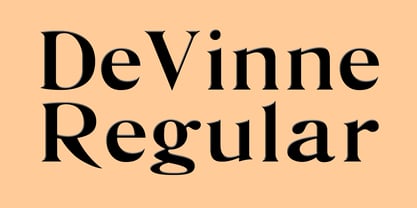
  28. De Vinne by Wooden Type Fonts, $15.00
    A revival of one of the popular wooden type fonts of the 19th century; suitable for text.
  29. Columbian Slab by Wooden Type Fonts, $20.00
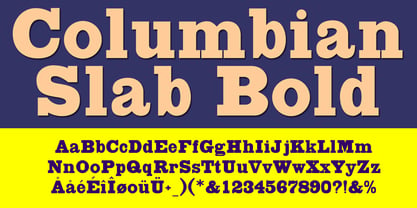
    One of the classic display types of the 19th century, an Egyptian with slab serifs. Quite bold.
  30. William Page 506 by Wooden Type Fonts, $15.00
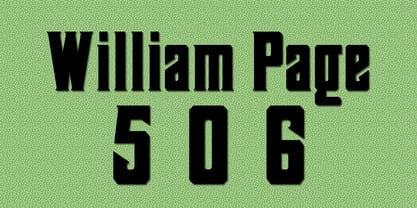
    A revival of one of the popular wooden type fonts of the 19th century, somewhat condensed, square.
  31. William Page 500 by Wooden Type Fonts, $15.00
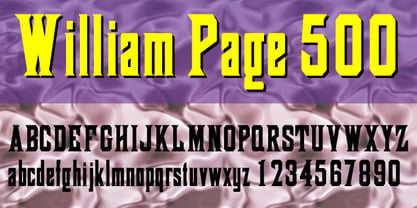
    A revival of one of the popular wooden type fonts of the 19th century, somewhat condensed, square.
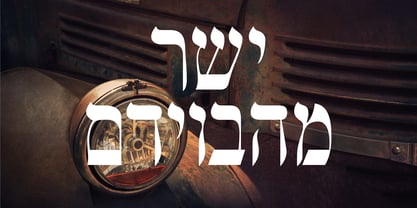
  32. Shtetl MF by Masterfont, $59.00
    Inspired by traditional old Biblical type, this font has a rich and unique style, with modern touch.
  33. Antique Three by Wooden Type Fonts, $15.00
    A revival of one of the popular wooden type fonts of the 19th century, suitable for text.
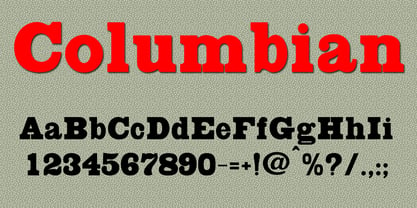
  34. Columbian by Wooden Type Fonts, $20.00
    One of the classic display types of the 19th century, an Egyptian with bracketed serifs. Quite bold.
  35. Clarendon Condensed Bold by Wooden Type Fonts, $15.00
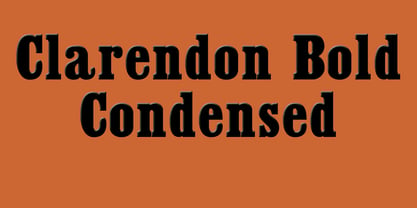
    A revival of one of the popular wooden type fonts of the 19th century, suitable for display.
  36. Ongunkan Ogham by Runic World Tamgacı, $50.00
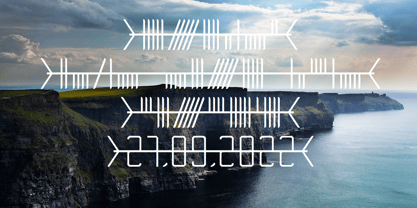
    This font is a latin based version of the ogham alphabet used in the writing of the old irish language. It can be used on Latin keyboards. I will make a unicode font version of this font in the future. Ogham (/ˈɒɡəm/ OG-əm, Modern Irish: [ˈoː(ə)mˠ]; Middle Irish: ogum, ogom, later ogam [ˈɔɣəmˠ] is an Early Medieval alphabet used primarily to write the early Irish language (in the "orthodox" inscriptions, 4th to 6th centuries CE), and later the Old Irish language (scholastic ogham, 6th to 9th centuries). There are roughly 400 surviving orthodox inscriptions on stone monuments throughout Ireland and western Britain, the bulk of which are in southern Munster. The largest number outside Ireland are in Pembrokeshire, Wales. The vast majority of the inscriptions consist of personal names. According to the High Medieval Bríatharogam, the names of various trees can be ascribed to individual letters. For this reason, ogam is sometimes known as the Celtic tree alphabet. The etymology of the word ogam or ogham remains unclear. One possible origin is from the Irish og-úaim 'point-seam', referring to the seam made by the point of a sharp weapon.
  37. DeDisplay by Ingo, $24.99
    A type designed in a grid, like on display panels Type is not only printed. There were always and still are a number of forms of type versions which function completely differently. Even very early in the history of script there were attempts to combine a few single elements into the diverse forms of individual characters and also efforts to construct the forms of letters within a geometric grid system. The “instructions” of Albrecht Dürer are probably most well-known. But although designers of past centuries assumed the ideal to basically be an artist’s handwritten script, the idea which developed in the course of mechanization was to “build” characters in a building block system only by stringing together one basic element — the so-called grid type was discovered, represented most commonly today by »pixel types.« But even before computers, there were display systems which presented types with the help of a mechanical grid display, like the display panels in public transportation (bus, train) or at airports and train stations. In a streetcar, I met up with a modern variation of this display which reveals the name of each tram stop as it is approached. This system was based on a customary coarse square grid, but the individual squares were also divided again diagonally in four triangles. In this way it is possible to display slants and to simulate round forms more accurately as with only squares. The displayed characters still aren’t comparable to a decent typeface — on the contrary, the lower case letters are surprisingly ugly — but they form a much more legible type than that of ordinary [quadrate] grid types. DeDisplay from ingoFonts is this kind of type, constructed from tiny triangles which are in turn grouped in small squares. The stem widths are formed by two squares; the height of upper case characters is 10, the x-height 7 squares. DeDisplay is available in three versions: DeDisplay 1 is the complex original with spaces between the triangles, DeDisplay 2 forgoes dividing the triangles and thus appears somewhat darker or “bold,” and DeDisplay 3 is to some extent the “black” and doesn’t even include spaces between the individual squares.
  38. Bauer Bodoni by Linotype, $45.99
    Giambattista Bodoni (1740-1813) was called the King of Printers; he was a prolific type designer, a masterful engraver of punches and the most widely admired printer of his time. His books and typefaces were created during the 45 years he was the director of the fine press and publishing house of the Duke of Parma in Italy. He produced the best of what are known as "modern" style types, basing them on the finest writing of his time. Modern types represented the ultimate typographic development of the late eighteenth and early nineteenth centuries. They have characteristics quite different from the types that preceded them; such as extreme vertical stress, fine hairlines contrasted by bold main strokes, and very subtle, almost non-existent bracketing of sharply defined hairline serifs. Bodoni saw this style as beautiful and harmonious-the natural result of writing done with a well-cut pen, and the look was fashionable and admired. Other punchcutters, such as the Didot family (1689-1853) in France, and J. E. Walbaum (1768-1839) in Germany made their own versions of the modern faces. Even though some nineteenth century critics turned up their noses and called such types shattering and chilly, today the Bodoni moderns are seen in much the same light as they were in his own time. When used with care, the Bodoni types are both romantic and elegant, with a presence that adds tasteful sparkle to headlines and advertising. The Bauer Bodoni was done by Heinrich Jost for Bauer Typefoundry in 1927. This version has finer details of the original Bodoni types. It works well for headlines, logos, advertising.
  39. FloraDings - Unknown license
  40. ImperatorBronzeSmallCaps - Unknown license
Looking for more fonts? Check out our New, Sans, Script, Handwriting fonts or Categories
abstract fontscontact usprivacy policyweb font generator
Processing