3,364 search results (0.022 seconds)
  1. GF Hubert Caps - Unknown license
  2. PR Uncial Alt Caps - Unknown license
  3. VTCKomixationHand - Unknown license
  4. moonie - Unknown license
  5. DS Motter Style - Unknown license
  6. DS Mechanical - Unknown license
  7. Seeds Cyr - Unknown license
  8. VTCKomixationSCBold - Unknown license
  9. VTCKomixationCaps - Unknown license
  10. VTCKomixationCapsBold - Unknown license
  11. VTCKomixationSCItalic - Unknown license
  12. VTCKomixationCapsItalic - Unknown license
  13. VTCKomixationRegular - Unknown license
  14. VTCKomixationSCBoldItalic - Unknown license
  15. VTCKomixationHandBold - Unknown license
  16. VTCKomixationSC - Unknown license
  17. DS Progress - Unknown license
  18. DSCyrillic - Unknown license
  19. ReservoirGrunge - Unknown license
  20. Clearblock circular - Unknown license
  21. Remington - Unknown license
  22. Beast Impacted - Unknown license
  23. China Town - Unknown license
  24. DS UstavHand - Unknown license
  25. Neuzeit Grotesk by URW Type Foundry, $39.99
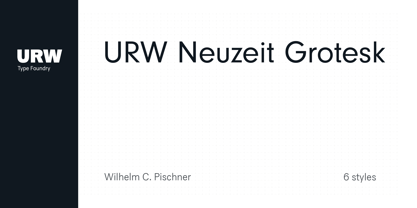
    Neuzeit Grotesk was originally designed by Wilhelm Pischner (1904-1989) and was released by the font foundry D. Stempel in 1928-1939. In 1970, the German Standards Committee advised the standard use of Neuzeit-Grotesk for official signage and traffic directional systems, and the abbreviation DIN was added to the name of the font. DIN" stands for Deutsches Institut für Normung (The German Institute for Industrial Standards). Neuzeit Grotesk was also once the standard in the German printing industry. It has been seen as a straightforward and utilitarian typeface, with no unusual or distracting features. Like other typefaces from the 1920s, it reflects the philosophy of those times, "Form is Function." Today, however, because of its familiarity and practicality, Neuzeit™ Grotesk has acquired an almost cheerful and reassuring aura. Try it out for signage, magazine headlines, or flyers. See also Neuzeit S for text weights of Neuzeit Grotesk.
  26. ITC Flora by ITC, $40.99
    ITC Flora is the work of Dutch designer Gerard Unger, and is named for his daughter. He started by doing calligraphy experiments with felt-tip and ballpoint pens, and developed these drawings into a formalized script typeface. Swiss typographer Max Caflisch advised the Dr.-Ing Rudolf Hell GmbH technology firm to add a new round-nibbed script face to their Digiset type library, and in 1984, Flora was released by Hell. Unger used a chancery cursive skeleton in this design, which imparts grace and movement. Flora was also intentionally designed to be simple and sturdy, and with its minimal variation in thick/thin stroke ratio, it worked well on the early digital typesetting machines. In 1989, the International Typeface Corporation released the font. ITC Flora continues to work well on current printers and typesetters, and it has an enduring popularity for uses that range from short text passages to display headlines.
  27. Tracer - Personal use only
  28. Achilles - Unknown license
  29. GUNJU - Unknown license
  30. Cyberia - Personal use only
  31. Procyon - Unknown license
  32. Detonator - Unknown license
  33. Video Star - Unknown license
  34. Z_exMastang - Unknown license
  35. Legion - Unknown license
  36. Concielian - Personal use only
  37. SF Willamette - Unknown license
  38. Angry bitch - Unknown license
  39. Zhikharev by ParaType, $30.00
    Designed at Polygraphmash in 1953 by Igor Zhikharev, based on his handwriting. The digital version was developed in 1989 by Gennady Baryshnikov, with the assistance of Vladimir Yefimov. An informal monoline script. For use in both text and display matter.
  40. Julius Thyssen - Unknown license
Looking for more fonts? Check out our New, Sans, Script, Handwriting fonts or Categories
abstract fontscontact usprivacy policyweb font generator
Processing
