1,173 search results (0.016 seconds)
  1. SlenderGoldFLF - Unknown license
  2. Marriage - Unknown license
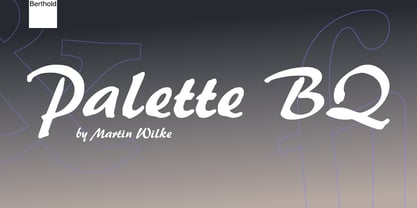
  3. Palette by Berthold, $57.99
    Palette was designed by Martin Wilke for Berthold in 1950.
  4. Estrangelo Edessa by Microsoft Corporation, $49.00
    The Estrangelo Edessa was developed by The Syriac Computing Institute and Microsoft to support the Syriac script. Syriac is written from right to left, like Arabic and Hebrew. You computer system must be properly enabled with keyboard layout and text input services (IME) to use this font. The Syriac letter forms in Estrangelo Edessa were designed by Paul Nelson and George Kiraz. The design is based on types from an Ohioan press, probably designed after a 1954 Estrangelo Monotype font. The Monotype font was designed with the assistance of R. Draguet, and in turn is based on an 1851 type used in Estrangelo Talada. Some symbols, including numerical symbols are based on the monospaced Courier type design. The Estrangengelo Edessa font first appeared in Windows XP.
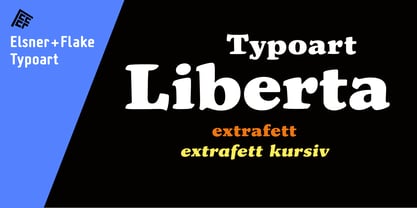
  5. Liberta TA by Elsner+Flake, $40.00
    Between 1958 and 1961, Herbert Thannhaeuser developed the typeface Liberta for Typoart as a broadly conceived newspaper type which established itself quickly. Its positive adaptation by publishing houses and printing companies was based, next to its agreeable and reader-friendly general impression, also on a relatively robust typeface character which does not sacrifice its power of impression and elegance even when confronted with poor paper and printing qualities. In the 1970s, a bullish and robust design style took over the area of consumer goods which then required a corresponding advertising face. Harald Brödel re-worked the Liberta Ultra for phototypesetting, and, with great sensitivity, designed a matching cursive variation. Both types work especially well as an attention getter for advertising and for emphasis purposes.
  6. HWT Lustig Elements by Hamilton Wood Type Collection, $24.95
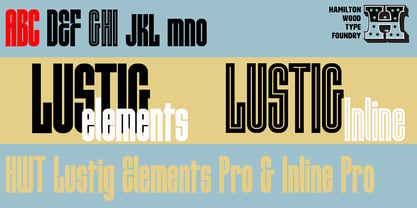
    'Euclid. A New Type,' originally designed in the 1930s by modern American designer Alvin Lustig (1915-1955), has been revived as 'Lustig Elements' through a collaboration of designers Craig Welsh and Elaine Lustig Cohen. Only twelve letterforms from the original font design had been retained in archive material in the many decades since its initial development. Lustig Elements combines four simple, geometric shapes aligned to an underlying grid with letterform designs that hold true to the spirit of the original font. Lustig Elements initially came to life in 2015 as wood type cut at Hamilton Wood Type & Printing Museum. The digital version expands on the basic character set with a pro expanded latin character set, small caps and even an Inline variation.
  7. Storage JNL by Jeff Levine, $29.00
    The range of subtle differences in the many different sized lettering stencils of the 1940s and 1950s allows for a wonderful library of authentic-looking stencil fonts. Storage JNL is another Roman (serif) type design by Jeff Levine and modeled from a 1950s stencil set.
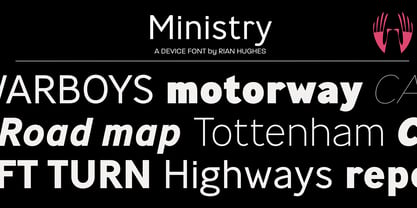
  8. Ministry by Device, $39.00
    A 14-weight sans family based on the original British ‘M.O.T.’ (Ministry of Transport) alphabet. A capitals-only, single-weight design was drawn up around 1933 for use on Britain’s road network, and remained in use until Jock Kinnear and Margaret Calvert’s ‘Transport Alphabet’ was introduced for Britain's first motorway in 1958. The identity of the original designer is not preserved; however, Antony Froshaug in a 1963 ‘Design’ magazine article mentions Edward Johnston as an advisor. Speculation that it was based on Johnston’s London Transport alphabet is discussed in archived government documents from 1957: “So far as I am aware, the Ministry alphabet was not based on Johnston’s design; indeed, it has been suggested that Gill got his idea from Johnston. Our alphabet was based on advice from Hubert Llewellyn-Smith (then chairman of the British Institute of Industrial Art) and Mr. J. G. West, a senior architect of H. M. Office of Works.” A 1955-57 revision of the alphabet which polished the somewhat mechanical aspects of the original may be the work of stone carver and typographer David Kindersley. For the digitisation, Rian Hughes added an entirely new lower case, italics and a range of weights. The lower case mimics the forms of the capitals wherever possible, taking cues form Gill and Johnston for letters such as the a and g, with single-tier versions in the italic. A uniquely British font that is now available in a versatile family for modern use.
  9. Faktos - Unknown license
  10. Ambient - Unknown license
  11. Florentine Cursive by Red Rooster Collection, $45.00
    R.H. Middleton for Ludlow, circa 1956. Digitally engineered by Steve Jackaman.
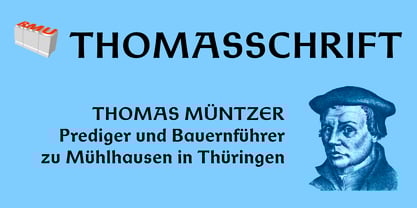
  12. Thomasschrift by RMU, $35.00
    Friedel Thomas’ 1957 Typoart font, redesigned and extended, for vintage use.
  13. Scentogram by PizzaDude.dk, $20.00
    Scentogram is a deco font inspired by some 1950-60 ads.
  14. Impuls by Bitstream, $29.99
    A vigorous brush design by Paul Zimmermann for Wagner in 1954.
  15. Ad Lib by Bitstream, $29.99
    Designed for informal effects in 1961 by Freeman Craw for ATF.
  16. Detective Bureau JNL by Jeff Levine, $29.00
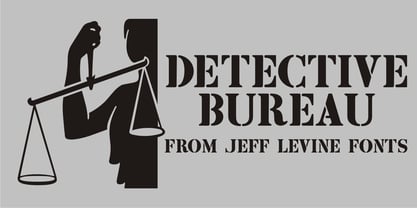
    Traditional stencil type faces have always projected images of strength, power, police, military or industry. The hand-lettered title card for 1951's "Detective Story" (directed by William Wyler) is a perfect example of this. A bold Roman letter style, it was the perfect inspiration for Detective Bureau JNL.
  17. Mural Script - Unknown license
  18. Arwen - Unknown license
  19. BerlinSmallCaps - Unknown license
  20. Nikita by Autographis, $39.50
    Nikita is a very lively upright script with lots of 1950s flair.
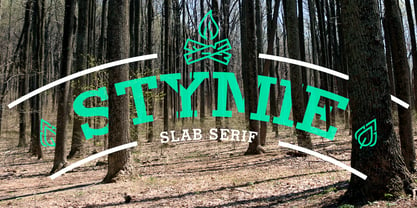
  21. Stymie by Bitstream, $30.99
    Morris Fuller Benton’s 1931 design, reworking the model of Memphis for ATF.
  22. Author - Unknown license
  23. Madrid by Red Rooster Collection, $45.00
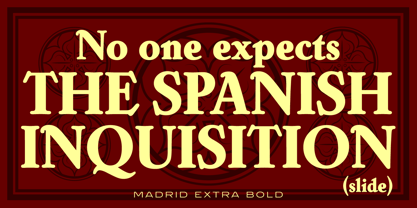
    Based on Nacional by Carlos Winkow from the Spanish foundry, Nacional, circa 1941.
  24. Livia - Unknown license
  25. Diego1 - Unknown license
  26. Show Card Freehand JNL by Jeff Levine, $29.00
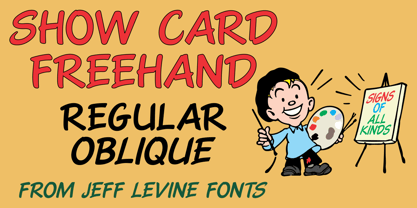
    The title and credits for the 1951 Dick Powell and Rhonda Fleming film “Cry Danger” were hand lettered in a freehand brush lettering often seen on store signs and show cards. Serving as the model for Show Card Freehand JNL, this pleasant and casual typeface is available in both regular and oblique versions.
  27. ARB-187 Moderne Caps AUG-47 by The Fontry, $25.00
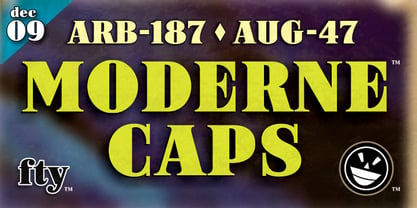
    Beginning in January, 1932, Becker, at the request of then-editor E. Thomas Kelly, supplied SIGNS of the Times magazine’s new Art and Design section with an alphabet a month, a project predicted to last only two years. Misjudging the popularity of the “series”, it instead ran for 27 years, ending finally two months before Becker’s death in 1959, for a grand total of 320 alphabets, a nearly perfect, uninterrupted run. In late 1941, almost ten years after the first alphabet was published, 100 of those alphabets were compiled and published in bookform under the title, “100 Alphabets”, by Alf R. Becker. And so, as published in August, 1937, The Fontry presents the truly "modern" version of Becker’s 187th alphabet, Moderne Caps, complete with OpenType features and Central European language support.
  28. Neue Hammer Unziale by Linotype, $29.99
    Unzial typefaces consist of letter forms of the Capitalis Monumentalis and the majescule cursive. The origins of Unizial faces date back to the 5th century. The Neue Hammer Unziale was developed from the Hammer typeface, which was designed by Victor Hammer in 1921, cut by A. Schuricht and appeared with the font foundry Klingspor in 1923. In 1953, American Unizial was expanded to include some new figures, also designed by Hammer, and was rereleased by Klingspor with the name Neue Hammer Unziale. The forms are based on old scripts in books of antiquity and the early Middle Ages and the font is a new variation of a classic. Neue Hammer Unziale has been a favorite for certificates and diplomas and is recommended for headlines and shorter texts in a point size of 12 or larger.
  29. Lichtner - Unknown license
  30. MultiformCaps - Unknown license
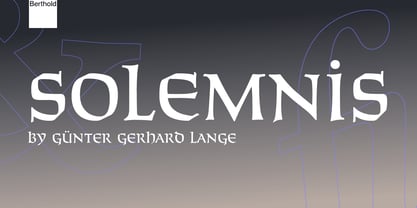
  31. Solemnis by Berthold, $67.99
    Solemnis was designed by Günter Gerhard Lange in 1953 and is a uncials-based typeface.
  32. Brassfield - Unknown license
  33. BlackAdderII - Unknown license
  34. Lichtner Italic - Unknown license
  35. ArtlookinOneType - Unknown license
  36. Ashley - Unknown license
  37. Beffle - Unknown license
  38. Letter Gothic 12 Pitch by Bitstream, $29.99
    Roger Roberson skillfully adapted the sanserif to the monospace IBM typewriter at Lexington, Kentucky, in 1956.
  39. Wedding Text by Bitstream, $29.99
    Morris Fuller Benton’s version of the standard American nineteenth century blackletter made for ATF in 1901.
  40. Altemus Leaves by Altemus Creative, $11.00
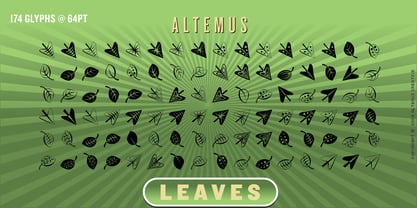
    Each style is a collection of 174 leaf, illustrative and printer cut designs from the 1950s.
Looking for more fonts? Check out our New, Sans, Script, Handwriting fonts or Categories
abstract fontscontact usprivacy policyweb font generator
Processing