10,000 search results (0.018 seconds)
  1. Madera Variable by Monotype, $229.99
    Malou Verlomme’s Madera is a typeface made strictly for graphic designers, created as an indispensable type toolbox that can meet the needs of both print and digital environments. Verlomme has drawn on his extensive experience creating bespoke type for major brands, and Madera is a “typographic synthesis” of this work. Although designed as a restrained sans serif, the typeface has some punchy personality – with sharpened apexes that inject flavour into the design, particularly in the darker weights and when set at all caps. Madera sits alongside fellow geometric designs such as Proxima Nova, Gotham or Avenir, offering a straight-talking tone of voice but with some extra bite. If you’re a large corporation, with a typeface being used in many different environments you want something that's just the right balance of visibility and legibility to sustain an extensive amount of communication.” “The design is very solid but it doesn’t go out of its way to attract attention,” explains Verlomme. “It still has a fair amount of warmth and personality, in a very understated manner. The Madera typeface family has 32 fonts: Upright, Condensed and Italics. It is available in OpenType CFF and TTF fonts formats. Each typeface contains over 650 glyphs with extensive Western, Central and Eastern European language support. It also supports OpenType typographic features like alternatives, ligatures and fractions. Madera Variables are font files which are featuring two axis and have a preset instance from Hairline to Extra Black.
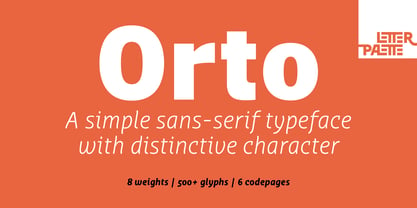
  2. Orto by LetterPalette, $20.00
    Orto is a type family of sans serif fonts in eight weights. It's a humanist typeface with real cursive, containing both Roman and Italic styles. The letters are designed to look good on screen, they have a bit narrower proportions and simple shapes. Their structure is based on flat horizontal and vertical strokes, which are emphasized wherever possible. That’s where the name comes from: Orto is an abbreviation of the word orthogonal. Thanks to its narrow width, the typeface is less space-consuming and adapts well to the screens of smaller devices. It is legible in small sizes, thanks to the larger x-height. The characteristic details, like bent ends of diagonal strokes, stand out when used in larger sizes. Orto can be used equally good in print and its overall neutral look fits different contexts. However, its character is pretty recognizable. Orto contains Latin and Cyrillic script and covers six codepages: Latin 1, Latin 2, Cyrillic, Turkish, Windows Baltic and MacOS Roman. It has basic OpenType features like ligatures, oldstyle numerals, proportional and tabular lining figures, fractions, superiors, etc. Capital German sharp S shows up when the lowercase is typed between two uppercase letters, and the Contextual Alternates feature is turned on. The Stylistic Set 01 changes the shape of the Cyrillic b. The Stylistic Set 02 is a shortcut for using Serban Cyrillic alternatives that differ from Russian in cursive.
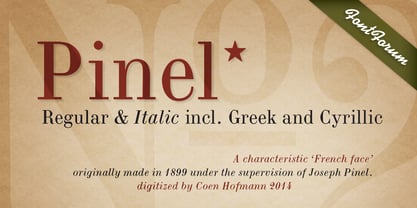
  3. Pinel Pro by URW Type Foundry, $39.99
    The characteristic ‘French face’ was originally made in 1899 under the supervision of Joseph Pinel. Thus, what was originally French 10 pt. Nº 2, got its present name. The Frenchman Joseph Pinel called himself a "typographical engineer", but was at the time employed as a type draughtsman at the Linotype Works in Altrincham. It appears that this and some other faces that he supervised, were, except for use on the Linotype, also meant for manufacturing matrices for the Dyotype. This composing machine was an invention of Pinel. The Dyotype was a rather complicated machine and consisted, like the Monotype, of two separate contraptions, a keyboard which produced a perforated paper ribbon and a casting machine which produced justified lines of movable type. Unlike the Monotype which has a square matrix carrier, the Dyotype had the matrices on a drum (in fact two drums, hence the name of the machine). A Pinel Diotype company was founded in Paris and a machine was built with the help of the printing press manufacturer Jules Derriey. As is often the case, a lack of sufficient capital prevented the commercializing of this ingenious composing machine. Coen Hofmann digitized the font from a batch of very incomplete, damaged and musty drawings, which he dug up in Altrincham. He redrew all characters, bringing up the hairstrokes somewhat in the process. The result is a roman and italic, while the roman font also includes Small Caps
  4. Agmena Paneuropean by Linotype, $103.99
    Agmena™ has no historical precursor; it was designed from scratch by Jovica Veljovi? whose aim was to create a new book typeface. Although it generally has certain similarities with the group of Renaissance Antiqua fonts, it is not clearly derived from any of these. Clear and open forms, large counters and a relatively generous x-height ensure that the characters that make up Agmena are readily legible even in small point sizes. The slightly tapering serifs with their curved attachments to letter stems soften the rigidity of the typeface, bringing Agmena to life. This non-formal quality is further enhanced by numerous tiny variations to the letter shapes. For example, there are slight differences to the terminals of the b", the "d" and the "h" and minor dissimilarities in the forms and lengths of serifs of many of the letters. The tittles over the "i" and "j" and those of the German umlauts are almost circular, while the diamond shape that is more characteristic of a calligraphic script is used for the punctuation marks. Although many of these variations are only apparent on closer inspection, they are enough to give Agmena the feeling of a hand-made typeface. It is in the larger point sizes that this feature of Agmena comes particularly into play, and individual characters gain an almost sculptural quality. The italic variants of Agmena are actually real cursives. The narrower and thus markedly dynamically formed lowercase letters have a wider range of contrast in terms of line thickness and have the appearance of having been manually produced with a quill thanks to the variations in their terminals. The lowercase "a" assumes a closed form and the "f" has a descender. The italic capitals, on the other hand, have been consciously conceived to act as a stabilising element, although the way they have been inclined does not produce a simply mechanical effect. This visual convergence with the upright characters actually means that it is possible to use letters from both styles in combination. Agmena is available in four weights: Book, Regular, Semibold and Bold, and each has its matching italic variant. Veljovi? designed Book and Regular not only to provide an optical balance between various point sizes, such as between that used for the text and that used in footnotes, but also to take account of different paper forms: Regular for lined paper and Book for publishing paper. Agmena's range of characters leaves nothing to be desired. All variants include small caps and various numeral sets with oldstyle and lining figures for setting proportional text and table columns. Thanks to its pan-European language support, Agmena can be used to set texts not only in languages that use the Latin alphabet as it also features Cyrillic and Greek characters. The set of standard ligatures has been extended to include special combinations for setting Greek and Serbian. Agmena also has some initial letters, alternative glyphs and ornaments. Agmena is a poetic text font with forms and spacing that have been optimised over years of work to provide a typeface that is ideal for setting books. But its letters also cut a good figure in the larger font sizes thanks to their individual, vibrant and, in some cases, sculptural effects. Its robust forms are not merely suited to a printed environment, but are also at home among the complex conditions on terminal screens. You can thus also use Agmena as a web font when designing your internet page."Agmena has received the Certificate of Excellence in Type Design at the Type Directors Club of New York TDC2 competition in 2013.
  5. FloraDings - Unknown license
  6. ImperatorBronzeSmallCaps - Unknown license
  7. My Puma Outlined - Unknown license
  8. AfterYear - Personal use only
  9. Creation - Unknown license
  10. KiddoTR - Unknown license
  11. My Puma Oblique - Unknown license
  12. ZoinkFat - Unknown license
  13. SF Cartoonist Hand SC - Unknown license
  14. Zoloft - Unknown license
  15. SF Foxboro Script Extended - Unknown license
  16. ZoloftSideffex - Unknown license
  17. Estrogen - Unknown license
  18. Sweden Funkis Outlined - Unknown license
  19. Sweden Funkis Regular - Unknown license
  20. Packet - Unknown license
  21. Mocha Java - Unknown license
  22. PuffedRice - Unknown license
  23. SF Junk Culture Condensed - Unknown license
  24. Westminster - Unknown license
  25. SF Junk Culture Shaded - Unknown license
  26. Kemuri - Unknown license
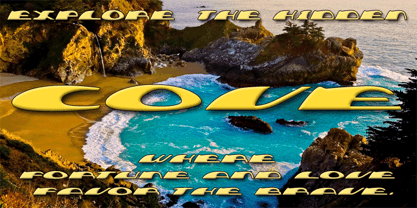
  27. Cove by FontMesa, $20.00
    Cove is a very modern wide type design sure to jazz up what ever you use it on.
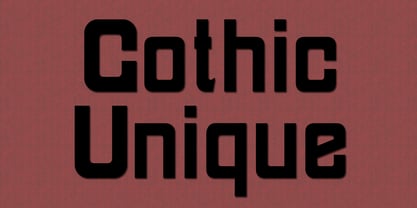
  28. Gothic Unique by Wooden Type Fonts, $15.00
    A revival of an unusual wooden type font of the 19th century, a sans serif, suitable for display.
  29. Antique Wells Extra by Wooden Type Fonts, $15.00
    A revival of one of the popular wooden type fonts of the 19th century, extra bold, slab Antique.
  30. Bamberg by Solotype, $19.95
    A compressed wood poster type from the mid-1800s. Certainly handy for excessive copy on a single line.
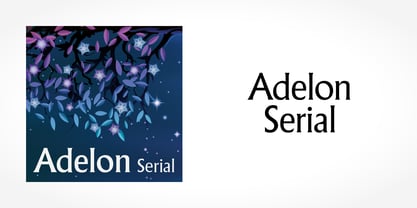
  31. Adelon Serial by SoftMaker, $15.99
    Adelon Serial is a classic flare serif typeface. Use it for titling, packaging, and other types of headlines.
  32. Hardal MF by Masterfont, $59.00
    A unique semi geometric type that is inspired by natural round forms that flow in a sweet harmony.
  33. Berengard Caps Two by Intellecta Design, $12.00
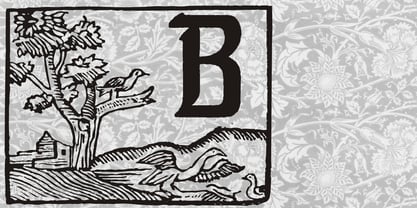
    a classical wood type era box ornament using blackletter... a beautiful arrangement for publishing edition and other jobs
  34. New Bodoni DT by DTP Types, $49.00
    A revival design by Malcolm Wooden of DTP Types Limited with associated Small Capitals and Old Style Figures.
  35. BillieBob by JOEBOB graphics, $-
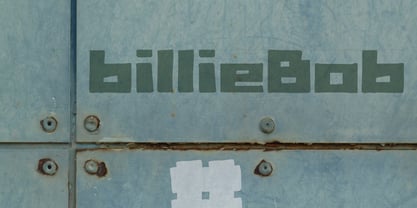
    BillieBob was made by cramping straight shapes into squares. Somewhat reminds me of pre cold-war Russian type.
  36. Champina by Forberas Club, $16.00
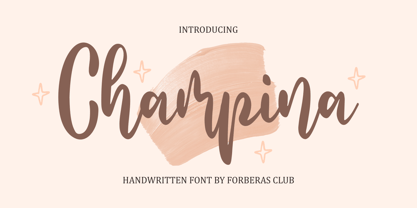
    Champina is handwritten font, Recommended uses for simple write, wall type, decoration, and poster. Free for personal use.
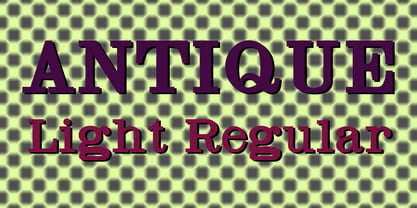
  37. Antique Light by Wooden Type Fonts, $15.00
    One of the classic display types of the 19th century, a slab font, suitable for text and display.
Looking for more fonts? Check out our New, Sans, Script, Handwriting fonts or Categories
abstract fontscontact usprivacy policyweb font generator
Processing