6,424 search results (0.016 seconds)
  1. kaden - Unknown license
  2. Arthur - Unknown license
  3. QueerStreet - Unknown license
  4. Damn Noisy Kids - Personal use only
  5. ColonialViper - Unknown license
  6. Zoomgroove - Unknown license
  7. Gimenells - Unknown license
  8. Scratchy - Unknown license
  9. Competitor - Unknown license
  10. Geriatric - Unknown license
  11. Fright - Unknown license
  12. Tanline - Unknown license
  13. Screen - Unknown license
  14. Rokford - Unknown license
  15. KAMonster - Unknown license
  16. Abecedarian - Unknown license
  17. Spacesuit - Unknown license
  18. SwingSet BB - Personal use only
  19. Antroposofia - 100% free
  20. Hydro - Unknown license
  21. GalactoseONE - Unknown license
  22. Digitalema - Unknown license
  23. Cathedral - Unknown license
  24. Du Bellay - Unknown license
  25. Graphitti - Unknown license
  26. Pantheon - Unknown license
  27. Ventouse - Unknown license
  28. Goudiad - Unknown license
  29. Blades - Unknown license
  30. QUAKE - Unknown license
  31. Craftopia Love - Unknown license
  32. KAPastaAldente - Unknown license
  33. Mira - Unknown license
  34. Hearts - Unknown license
  35. Candles - Unknown license
  36. Blockhead - Unknown license
  37. SysFlash by FSD, $6.15
    SysFlash is the version of Sys to use in Macromedia Flash at 10 point size.
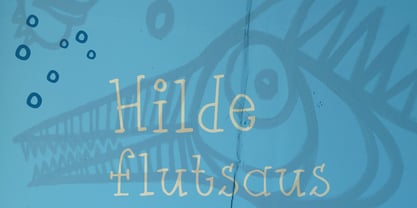
  38. flutSaus by JOEBOB graphics, $-
    Another font by Hilde Rikken (age 10) with crazy serifs and almost every special sign.
  39. Ongunkan Arkaic Greek by Runic World Tamgacı, $45.00
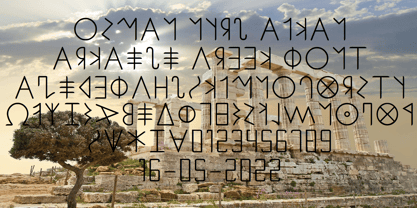
    Many local variants of the Greek alphabet were employed in ancient Greece during the archaic and early classical periods, until around 400 BC, when they were replaced by the classical 24-letter alphabet that is the standard today. All forms of the Greek alphabet were originally based on the shared inventory of the 22 symbols of the Phoenician alphabet, with the exception of the letter Samekh, whose Greek counterpart Xi (Ξ) was used only in a sub-group of Greek alphabets, and with the common addition of Upsilon (Υ) for the vowel /u, ū/.[1][2] The local, so-called epichoric, alphabets differed in many ways: in the use of the consonant symbols Χ, Φ and Ψ; in the use of the innovative long vowel letters (Ω and Η), in the absence or presence of Η in its original consonant function (/h/); in the use or non-use of certain archaic letters (Ϝ = /w/, Ϙ = /k/, Ϻ = /s/); and in many details of the individual shapes of each letter. The system now familiar as the standard 24-letter Greek alphabet was originally the regional variant of the Ionian cities in Anatolia. It was officially adopted in Athens in 403 BC and in most of the rest of the Greek world by the middle of the 4th century BC.
Looking for more fonts? Check out our New, Sans, Script, Handwriting fonts or Categories
abstract fontscontact usprivacy policyweb font generator
Processing