3,760 search results (0.008 seconds)
  1. Neue Alte Grotesk by VisualWorks, $20.00
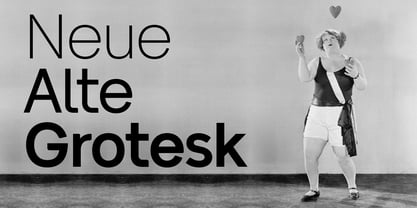
    Inspired by German grotesk from XIXth century. Driven by the spirit of 1950s Swiss Style. Designed with a hint of constructivist approach. Neue Alte Grotesk is a minimalistic typeface with a distinct character. It is created to connect both new and old. It will look good in juxtaposition with retro-styled illustrations and ultra-modern graphics.
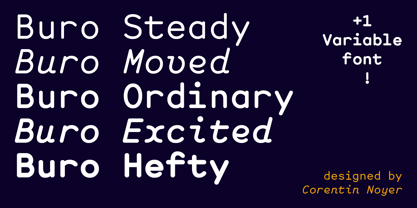
  2. Buro by Corentin Noyer, $34.00
    The Buro is a text font, monospace, sans-serif with rounded endings. It is characterized by its monolinear outline (slight optical corrections) and its discontinuous Roman structure. He tries to reproduce the outline of a letter drawn with a pen. The design of the Buro is inspired by the cursive letters used in Olympia typewriters of the 1950s.
  3. Dance Lesson JNL by Jeff Levine, $29.00
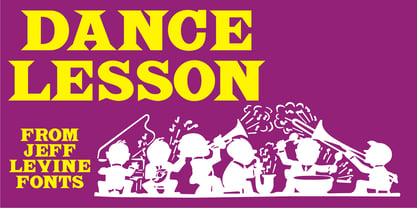
    Dance Lesson JNL is a reinterpretation of the popular "Latin Bold" typeface. The font's name is a reference to the Latin dance craze of the 1950s, when the Cha-Cha, Meringue, Tango, Mambo and even the "Chalypso" - a hybrid of Cha-Cha and Calypso rhythms had everyone moving to the beat of Central and South America.
  4. La Bamba by ITC, $29.99
    La Bamba is the work of British designer David Quay and heavily influenced by the style of the 1950s. It comes with complete upper and lowercase alphabets as well as a set of decorated initialling capitals for added variety. La Bamba is a casual design with wedge-shaped serifs and radiates a gay, light-hearted mood.
  5. Telegram by ITC, $29.00
    Telegram is the work of British designer Timothy Donaldson, a casual style influenced by the ball and rod, or atomic, imagery popular during the 1950s. Donaldson called the typeface Telegram because it reminds him of dots and dashes. Telegram is a play alphabet which communicates an almost childlike innocence and is ideal for work directed at younger people.
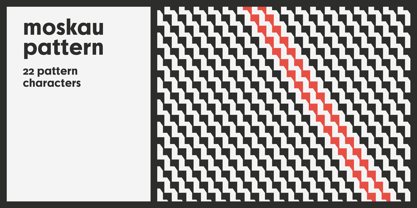
  6. Moskau Pattern by Letter Edit, $49.00
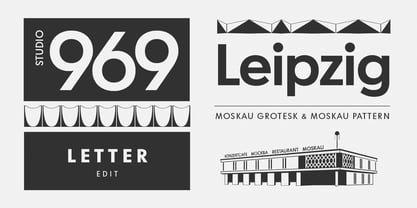
    The design of the typeface Moskau Grotesk and Moskau Pattern is based on the signage created for the Café Moskau in Berlin by the graphic artist Klaus Wittkugel in the beginning of the 1960s. The Café Moskau, across from the Kino International on Karl-Marx-Allee in Berlin Mitte was one of the prestige edifices of the former DDR (German Democratic Republic). Built in the early 1960s, it advanced over the years and changing social developments to a trademark building of the capital. The lettering display on the roof was created by the graphic artist Klaus Wittkugel (October 17, 1910 – September 19, 1985). He had been Professor at the School for Applied Arts in Berlin, and, in addition to the creation of many posters, book covers and postage stamps, he was responsible for the signage of the Kino International as well as for the complete graphic treatment for the Palace of the Republik. The signage for the Café Moskau with the words »RESTAURANT«, »CAFÉ«, »KONZERT« and »MOCKBA« set in capital letters, becomes the basis for the Moskau Grotesk which was developed by Björn Gogalla in 2013. This face should not be seen as an imitation. A few shortcomings were »fixed«. In favor of maintaining the core characteristics some unique features were, however, not relinquished. Lower case letters and the missing capital letters were designed from scratch. It is not surprising that the plain, unassuming geometrical direction of the basic character style forms a bridge to the architecture of the 1960s. Inspired by the then favored, diverse possibilities inherent in the architectural example and wall reliefs, two complimentary pattern fonts emerged.
  7. Moskau Grotesk by Letter Edit, $39.00
    The design of the typeface Moskau Grotesk is based on the signage created for the Café Moskau in Berlin by the graphic artist Klaus Wittkugel in the beginning of the 1960s. The Café Moskau, across from the Kino International on Karl-Marx-Allee in Berlin Mitte was one of the prestige edifices of the former DDR (German Democratic Republic). Built in the early 1960s, it advanced over the years and changing social developments to a trademark building of the capital. The lettering display on the roof was created by the graphic artist Klaus Wittkugel (October 17, 1910 – September 19, 1985). He had been Professor at the School for Applied Arts in Berlin, and, in addition to the creation of many posters, book covers and postage stamps, he was responsible for the signage of the Kino International as well as for the complete graphic treatment for the Palace of the Republik. The signage for the Café Moskau with the words »RESTAURANT«, »CAFÉ«, »KONZERT« and »MOCKBA« set in capital letters, becomes the basis for the Moskau Grotesk which was developed by Björn Gogalla in 2013. This face should not be seen as an imitation. A few shortcomings were »fixed«. In favor of maintaining the core characteristics some unique features were, however, not relinquished. Lower case letters and the missing capital letters were designed from scratch. It is not surprising that the plain, unassuming geometrical direction of the basic character style forms a bridge to the architecture of the 1960s. Inspired by the then favored, diverse possibilities inherent in the architectural example and wall reliefs, two complementary pattern fonts emerged.
  8. KinigKap - Unknown license
  9. Flemish Script by Bitstream, $29.99
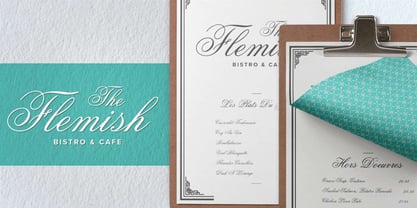
    An ornate roundhand with looped ascenders and strongly flourished capitals prepared at Photon for their phototypesetters about 1960.
  10. Uptown Residence JNL by Jeff Levine, $29.00
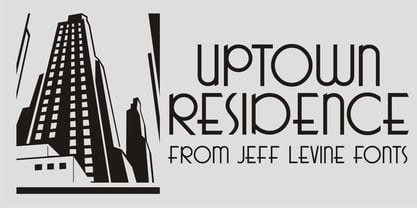
    The title card for the 1940 film "Too Many Husbands" served as the inspiration for Uptown Residence JNL.
  11. Brigida by Monotype, $29.99
    The Brigida font was influenced by a very common European letter form used in Sweden between 1350-1500.
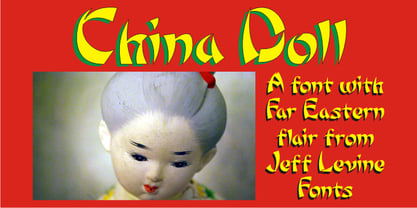
  12. China Doll JNL by Jeff Levine, $29.00
    A 1960 edition of the Speedball® Pen lettering instruction book yielded the model for China Doll JNL.
  13. Bloody Murder BB by Blambot, $20.00
    A classic, comic book sound effects font, inspired by 1970's horror books! Contains dozens of European characters!
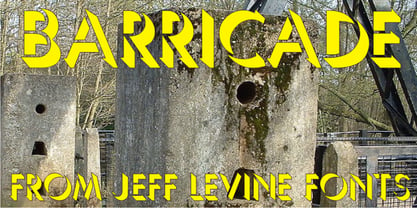
  14. Barricade JNL by Jeff Levine, $29.00
    Barricade JNL is Jeff Levine's take on an old favorite that's been around since at least the 1940s.
  15. Largo EF by Elsner+Flake, $35.00
    The typefaces Largo Mager (Light) and Largo Halbfett (Medium) were cast for the first time in 1937 by Ludwig & Mayer based on the designs by Hans Wagner. One weight Largo Licht (Outline) was added in 1956. All fonts were only configured with capitals. The digital version of Largo has pointed serifs and not the slightly rounded ones seen in the hot metal versions which gives the typeface a more elegant note. Largo is often used for fine printing jobs as business cards or formal invitations, or in the fashion and cosmetics fields. Hans Wagner was born in Munich in 1894 and died in 1977 in Altenburg where he had worked as a painter, graphic designer and book designer. In addition to the Largo typeface, he developed, among others, the Altenburger Gotisch (1928), the Welt-Antiqua (1931-1934) and the Wolfram (1930).
  16. Stellar by Monotype, $29.99
    Robert Hunter Middleton drew the original design of Stellar for the Ludlow Typograph Company in Chicago. Work began in the late 1920s, when Middleton was asked to create a sans serif type family to compete with European imports of Futura and Kabel. Stellar was Middleton's attempt to raise the ante. Where Futura and Kabel were geometric in design and monotone in weight, Stellar was based on roman character proportions and stroke weighs were stressed. In the late 1990s, Dave Farey took on the task of reviving the Stellar design. While Ludlow cut Stellar in a full range of point sizes, the family was limited to just a roman and bold design. Farey's revival is twice as large a family. It ranges from a very light called Stellar Nova to a very bold called Zeta In between are Lyra and Epsilon.
  17. Disko - Personal use only
  18. Casual Slab Serif JNL by Jeff Levine, $29.00
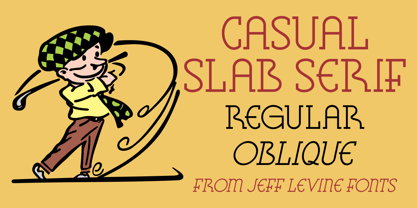
    Samuel Welo’s “Studio Handbook for Artists and Advertisers” (published in both 1927 and 1960) showcased this talented man’s hand-lettered alphabets; used as inspiration for the sign trade and for graphic designers. A particularly interesting slab serif from the 1960 edition has many unusual character shapes, and served as the model for Casual Slab Serif JNL – available in both regular and oblique versions.
  19. Balthazar - Unknown license
  20. Enliven - Unknown license
  21. Comix - Unknown license
  22. Anatevka Caps - Unknown license
  23. GauFontSpyLetter - Unknown license
  24. OrangeRoyale by The Northern Block, $16.70
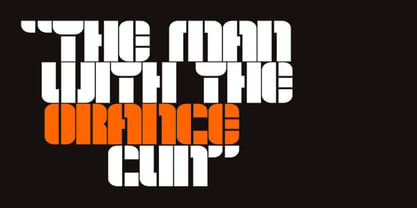
    A round modular typeface inspired by British movie posters of the 1970s such as Stanley Kubrick's A Clockwork Orange .
  25. Courier 10 Pitch WGL by Bitstream, $49.00
    Another in the series of competent IBM serifed typewriter faces, this one from Howard Kettler in Lexington in 1956.
  26. Amati AR by ARTypes, $35.00
    Based on the 60-point Amati designed by Georg Trump and issued by C. E. Weber (Stuttgart) in 1953.
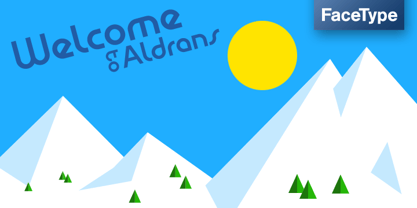
  27. Aldrans by FaceType, $20.00
    Aldrans Medium is a homage to the poster style used in the 1920’s to promote skiing in Austria.
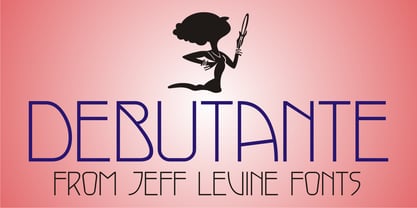
  28. Debutante JNL by Jeff Levine, $29.00
    1920s Art Nouveau hand lettering from the sheet music for Puccini's "Madame Butterfly" is the inspiration for Debutante JNL.
  29. Courier 10 Pitch by Bitstream, $29.99
    Another in the series of competent IBM serifed typewriter faces, this one from Howard Kettler in Lexington in 1956.
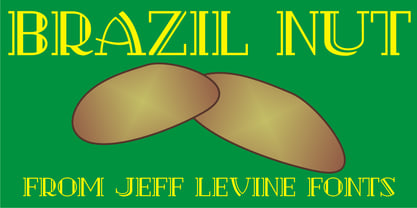
  30. Brazil Nut JNL by Jeff Levine, $29.00
    Brazil Nut JNL comes from hand lettering on some 1920s sheet music from Florenz Ziegfeld's musical comedy "Rio Rita".
  31. Pencil Pusher JNL by Jeff Levine, $29.00
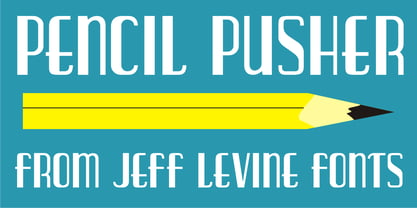
    The unusual hand lettering found on a piece of 1940s sheet music forms the basis for Pencil Pusher JNL.
  32. BillyBears Panda - Unknown license
  33. BillyBear Dinosaurs - Unknown license
  34. BillyBear EasterFont - Unknown license
  35. BillyBears LoveNotes - Unknown license
  36. Betty Noir - Personal use only
  37. BillyBear TeddyBear - Unknown license
  38. BillyBear Bunny - Unknown license
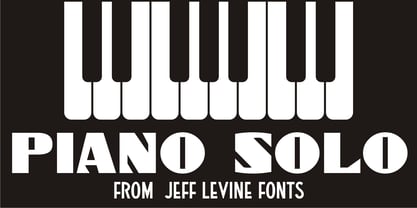
  39. Piano Solo JNL by Jeff Levine, $29.00
    The hand-lettered name on a couple of 1940s-era piano course books was the basis for Piano Solo JNL.
  40. Vogue by E-phemera, $12.00
    Vogue is extrapolated from some words in a 1930s brochure from Western Union called The Vogue of the Social Telegram.
Looking for more fonts? Check out our New, Sans, Script, Handwriting fonts or Categories
abstract fontscontact usprivacy policyweb font generator
Processing