10,000 search results (0.574 seconds)
  1. Tinsnips - Unknown license
  2. Union City Blue - Unknown license
  3. Relish Gargler - Unknown license
  4. Oliver's Barney - Unknown license
  5. GroovyGhosties - Unknown license
  6. Sudbury Basin - Unknown license
  7. Mister Firley - Unknown license
  8. Wet Pet - Unknown license
  9. Yonder Recoil - Unknown license
  10. Stentiga - Unknown license
  11. Yytrium - Unknown license
  12. PresidentGas - Unknown license
  13. Johnny Fever - Unknown license
  14. Betsy Flanagan - Unknown license
  15. Pop Up Fontio - Unknown license
  16. Mold Papa - Unknown license
  17. New Brilliant - Unknown license
  18. Plasmatic - Unknown license
  19. Po Beef - Unknown license
  20. Outright - Unknown license
  21. Subpear - Unknown license
  22. 6809 Chargen - Unknown license
  23. Biting My Nails - Unknown license
  24. Horsepower - Unknown license
  25. Failed Attempt - Unknown license
  26. Numberpile Reversed - Unknown license
  27. Strenuous 3D - Unknown license
  28. Guanine - Unknown license
  29. Octoville - Unknown license
  30. Terylene Top - Unknown license
  31. Pirulen - Unknown license
  32. Lunasol - Unknown license
  33. Snidely - Unknown license
  34. Screengem - Unknown license
  35. 1980 Portable - Unknown license
  36. Skeletor Stance - Unknown license
  37. Vibrocentric - Unknown license
  38. Zodillin - Unknown license
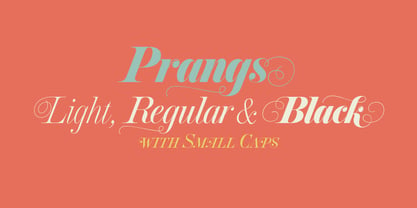
  39. Prangs by Sudtipos, $59.00
    The late-19th-century Prussian-American printer and publisher Louis Prang, the “father of the American Christmas card”, was well-known for his efforts to improve art education in the United States. He published many instructional books and even founded a training school for art teachers. One of the books he published included a series of alphabets for sign painters, lithographers, illuminators, architects and civil engineers. There was nothing truly original there — in the book’s preface, Prang says that the alphabets were “based on foreign forms and adapted for American taste”. The one alphabet that caught my attention in that book was one simply called “Italic”. It’s a high- contrast modern, a Didone really, but with an interesting little twist: the lowercase is almost entirely connected, which makes for an interesting mix of modern typography and classic calligraphy. That stuff is right up my alley now. Whenever my eyes happen on a modern, it’s easy, even almost impulsive for me to envision swashes coming out of serifs and terminals. The caps melt and the minuscules dance with them. And so I brought my vision to life. Prangs is an italic set of three weights, each containing more than 1400 glyphs with plenty of OpenType features and Latin language support. This set celebrates the convergence of three centuries of fancy display alphabets. These fonts should work wherever moderns are used to elevate and scripts are used to appeal — namely today’s branding, packaging and glossy publications.
  40. Maritote by I Can Be Your Type, $20.00
    While designing a logotype for a client, she described herself as "loud and colorful." Thinking about some eras in typefaces that portrayed this idea, I instantly thought of the "Roaring 20s" and the Prohibition era where the cinema is starting to take off and the Italian mafia are running the bars. (Which is coincidental because my client has family connections to Al Capone.) One of the most iconic typefaces designed for these times was Broadway by Morris Fuller Benton in 1925. This typeface was the zeitgeist of Broadway, the big city, theater, and cinema, which can now be seen in use almost everywhere an old family run cinema is located. Using the heavy influences of the thick and thin contrast of this typeface, Maritote brings the charm of Broadway into the 21st century.
Looking for more fonts? Check out our New, Sans, Script, Handwriting fonts or Categories
abstract fontscontact usprivacy policyweb font generator
Processing