9,358 search results (0.018 seconds)
  1. xtryme - Personal use only
  2. Charons Obol - Personal use only
  3. ROTRING - Unknown license
  4. Strobo - 100% free
  5. Alien Encounters - Unknown license
  6. Imperfect font - Unknown license
  7. Deco Slice - Personal use only
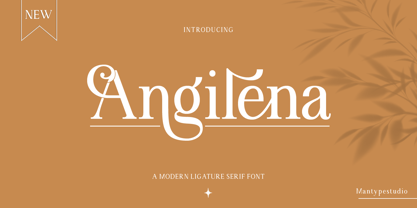
  8. Angilena by Mantype Studio, $14.00
    Angilena is an elegant, unique font that uses ligatures to smoothly link letters. Perfect for adding a unique twist to word-mark logos, monograms or pull quotes. Angilena has 51 ligatures as well as numbers and punctuation making it super versatile. Ligatures are able to be turned off if needed for body copy. To make it look more unique, here we prepared some ligatures:ca cb ch ck cm cn cp cr ea eb eh ek em en ep er ib id ih ik il iga ig ga gi mg ng ob oh ok om on op or oo tb th tk tm tn tp tt ti tu ro vo wo yo vi wi yi
  9. Top Secret - 100% free
  10. Nyctophobia - Personal use only
  11. Weaponeer - Personal use only
  12. Robotech Complete - Unknown license
  13. Metal as in Heavy - Unknown license
  14. triangler - Unknown license
  15. Facet Black - 100% free
  16. pee pants script - Personal use only
  17. Staggering Bob - Unknown license
  18. Pudmonkey - Unknown license
  19. Xenogears - 100% free
  20. Nasalization - Unknown license
  21. DS Crystal - Unknown license
  22. Blockography - Personal use only
  23. Ganymede3D - Personal use only
  24. Offshore Banking Business - Unknown license
  25. WC Rhesus A Bta - Unknown license
  26. Pointened - 100% free
  27. !Sketchy Times - Unknown license
  28. Ink Tank (BRK) - Unknown license
  29. Catchy Mager by Sensatype Studio, $19.00
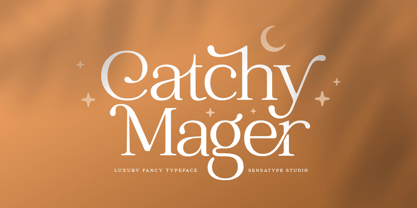
    Catchy Mager is a unique and very elegant font for brand and logo design. Based on our experience as a graphic designer who works for a lot of companies, we often are requested to design a logo in a unique style but with an elegant shape. So, we try to brainstorming and create this font to make the idea is going out. This is perfect for BRANDING and LOGO DESIGN. You will get classy, elegant, and certainly unique logos with this font. To make it look more unique, here we prepared some ligatures: ab ah am an ar ap at cb ch cm cn cr eb eh em en ep er ub uh um un up ur fl fi ff ft ga gi it ai Include Fancy Style on Every Uppercase and Some Lowercase
  30. Gemina - Personal use only
  31. Tapeworm - Unknown license
  32. KlingonBlade - Unknown license
  33. Quick End Jerk - Unknown license
  34. Ben-Zion - Personal use only
  35. Electrofied - 100% free
  36. War Eagle - Personal use only
  37. Apolline Std by Typofonderie, $59.00
    A Venetian serif in 6 styles The Apolline typeface family was created by Jean François Porchez as a means to study the transition from Renaissance writing into the first printing types. Rather than sticking to the method commonly used these days for the creation of revivals of Jenson or Bembo types, it seemed more interesting to try and get in the same mindset as those exceptional designers during this pivotal period in the history of typography. Thus Apolline is an exploration of the design methods used by people like Nicolas Jenson and his contemporaries for adapting handwriting with its multiple occurrences (a, a, a, b, b, b…) into single, unique signs (a, b…). Initially Jean François made drawings modelled after his own calligraphy. They were done at a very small size on tracing paper (2 cm high for the capitals) to preserve the irregularity of human handwriting. Besides emphasising the horizontal parts of the letter forms, the serifs were designed asymmetrically to reinforce the rhythm of the writing. The final drawings were produced at a large size (10 cm high for the capitals) to allow for subtle optimisation of specific details. The very narrow and fluid Apolline italic Influenced by various concepts for an ideal italic by Van Krimpen, Gill, etc. Apolline italic was designed at 8° degrees. Although the structure of the letterforms were informed by chancery scripts, the italic has full serifs like the roman. Very narrow and fluid, its unique design creates a good contrast when used in combination with its upright counterparts. Thanks to the presence of the serifs similar to roman typefaces it sets very neatly in large sizes. The next step was digitising the drawings with Ikarus (the pre-Bézier-curves era) to create the final roman and italic fonts. Two years later, when the family was expanded to six series the same method was used, this time with Fontographer. This was necessary for correcting a few problems caused by the conversion to Bézier outlines, and to add intermediate weights. Before the advent of feature-rich OpenType, quality type families consisted of several separate fonts for each weight to provide users with various sets of numerals, an extended ligature set and alternates, ornaments, and so on. Introducing Apolline Morisawa Awards 1993
Looking for more fonts? Check out our New, Sans, Script, Handwriting fonts or Categories
abstract fontscontact usprivacy policyweb font generator
Processing